Does Flex Seal Actually Work on an RV Roof? A Mobile Tech's Honest Answer
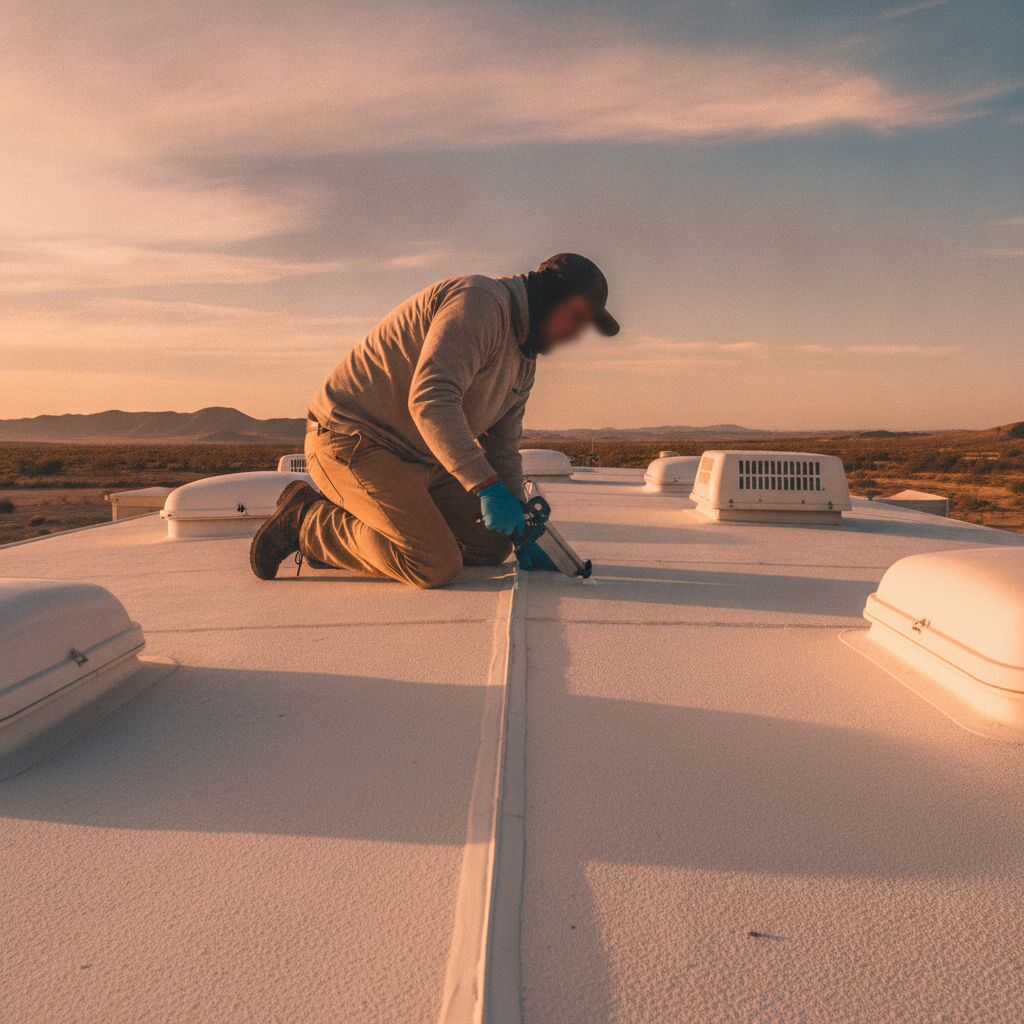
Consumer sealant products come up constantly when RV owners are dealing with a roof leak — here's an honest take on when they help and when they can actually complicate things.
Where Consumer Sealants Can Work
As a genuinely temporary patch on a small, identified leak point — to get you through a trip until a proper repair — a consumer-grade sealant can buy you time. That's a reasonable use case.
Where They Fall Short
RV roofs are made from specific materials (EPDM rubber, TPO, fiberglass) that each pair with a specific roof-grade sealant formulated for that material's flexibility and adhesion needs. A generic consumer sealant isn't always compatible, and can sometimes make a later professional repair harder — because the surface needs to be properly prepped and the old product removed first.
The Bigger Risk: Masking the Real Problem
A surface patch can stop a visible drip without addressing why the seal failed in the first place — often UV degradation of the surrounding material, not just a single crack. If the underlying cause isn't addressed, water intrusion can continue in ways you don't see until interior damage shows up.
Our Honest Recommendation
If you're mid-trip and need to stop water intrusion right now, a temporary patch is a reasonable stopgap. But treat it as exactly that — temporary — and get a proper roof inspection and repair as soon as you're able to.
Phoenix RV Repair can assess whether a DIY patch has held up or needs a proper fix — reach out for a free quote.
Ready to get your RV back on the road?
We come to you. Free, no-obligation quote.